Our Approach
We understand that compliance is not limited to observing laws and regulations, but also includes observing social norms, corporate ethics, common sense and morals, and all other matters expected by society even if they are not explicitly stated.
Management System
Mitsui Kinzoku Group identifies Senior General Manager of Corporate Planning & Control Sector as the person with the highest responsibility for compliance. The Legal Dept., the division in charge of compliance, plays a central role in enhancing compliance among officers and employees.
In addition, under the Internal Audit Committee, which reports directly to the Board of Directors, the Internal Audit Dept. audits the status of compliance. The results of the audits are reported by the Internal Audit Dept. to and shared by the Board of Directors.
Code of Conduct
Understanding and sharing Code of Conduct
The Code of Conduct shows a set of values and actions to be shared by all officers and employees of Mitsui Kinzoku Group.
To successfully promote the well-being of the world, as declared in the Purpose, we first need to be trusted by our stakeholders. As the Code of Conduct underpins the sound business continuity based on the Purpose, we will disseminate it across the Group through various educational and awareness-raising activities.
Code of Conduct
Revision of the Code of Conduct: from standards to norms
Mitsui Kinzoku Group established its Code of Conduct (Revised 3rd edition as of July 2016) as a set of values and a code of conduct to be shared by all officers and employees, and we have translated it into local languages and distributed it to all sites. Recognizing internal and external changes over time, including establishment of the Purpose and Values, and increasing expectations from stakeholders, we established a revised Code of Conduct with an updated Japanese title, Koudou Kihan (Kihan means “norms”), from the previous title, Koudou Kijun (Kijun means “standards”), as of April 1, 2025.
Along with the new Code of Conduct, we also revamped the Compliance Guidebook to explain the key actions.
Global rollout of Compliance Guidebook
After we have assessed the compliance-related risks in each country and region in which we operate and considering the possible impacts of such risks on our business activities, we are starting the rollout of Compliance Guidebook in Asia with priority, and plan to expand to other regions. The Compliance Guidebook has been translated into local languages in cooperation with local staff to reflect the unique risks assumed from local business practices and cultural backgrounds. We are gradually rolling it out to overseas sites.
Global rollout of Compliance Guidebook (2016ー2025)
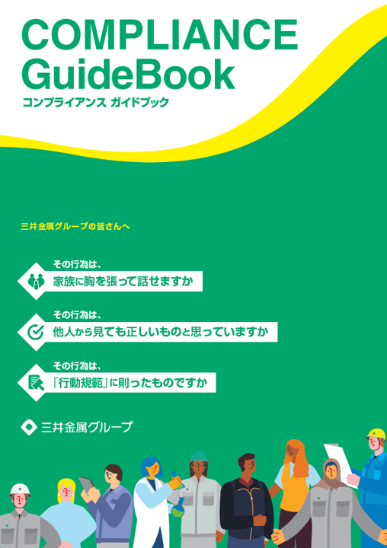 Japanese(2025 Revised Edition)
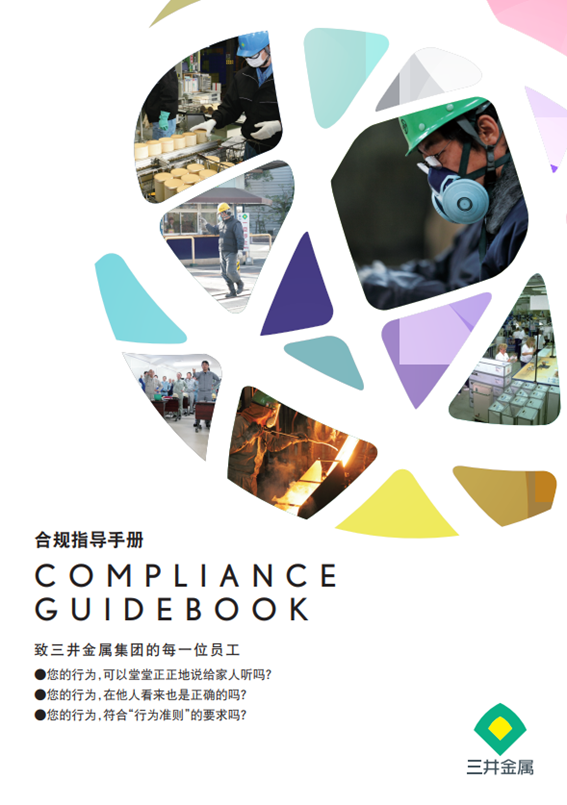 Simplified Chinese (2017)
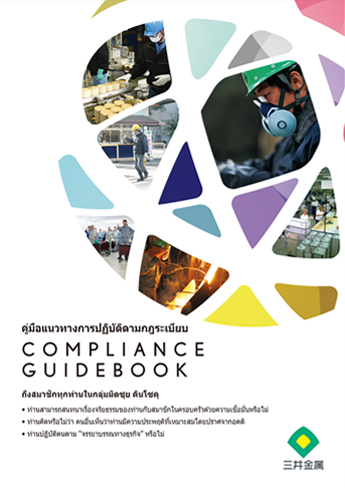 Thai (2017)
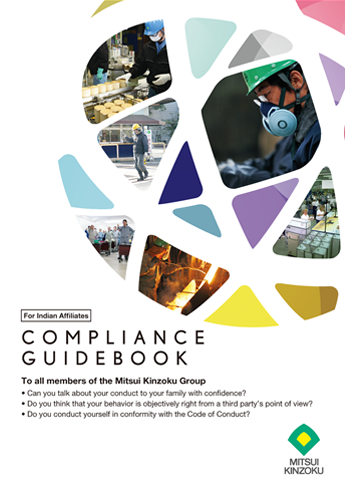 English:India (2018)
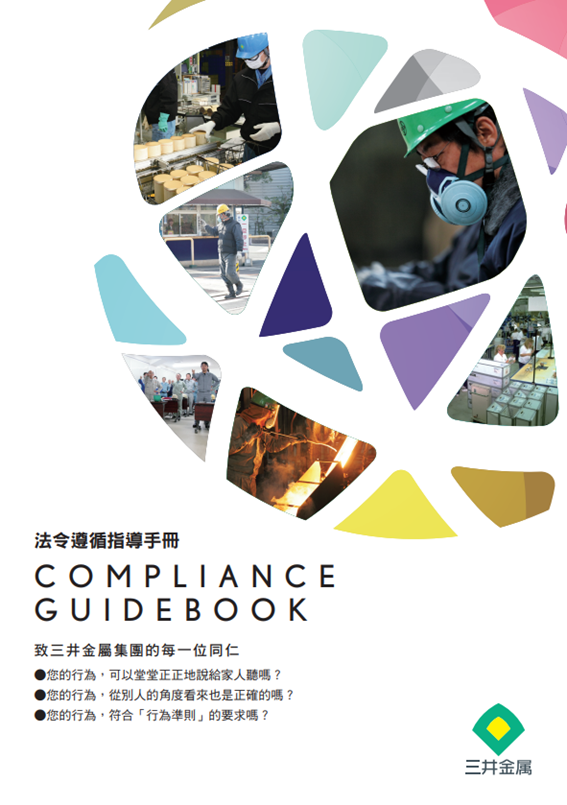 Traditional Chinese (2018)
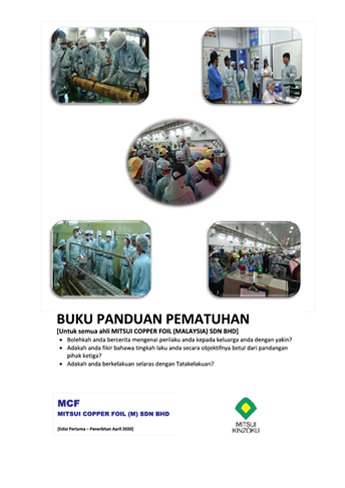 Malay (2019)
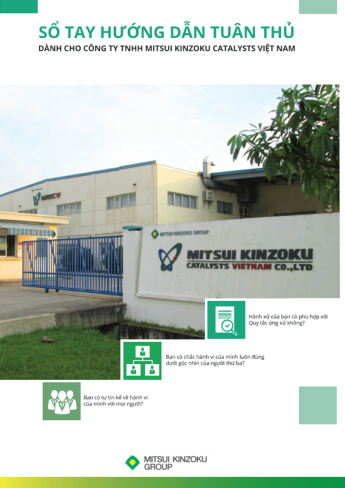 Vietnamese (2019)
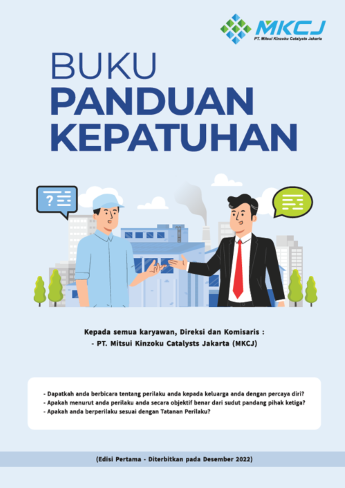 Indonesian (2022)
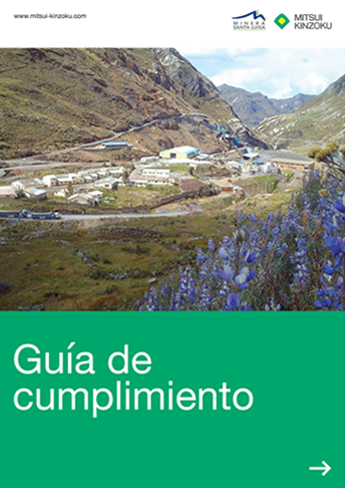 Spanish:Peru (2023)
Compliance Survey
To measure the understanding level of the Code of Conduct and the effectiveness of compliance initiatives, we have conducted biennial compliance surveys with employees of Mitsui Kinzoku and consolidated domestic subsidiaries since FY2017. In years when no survey is conducted, we analyze the previous year’s survey results and implement follow-up measures such as providing feedback.

Compliance Training
Mitsui Kinzoku Group runs an array of training programs for executives and employees to ensure compliance.
The Code of Conduct/compliance training
We regularly conduct training sessions for all employees to explain overall compliance based on the Code of Conduct. At our sites in Japan and overseas, we provide compliance training for all ranks, and executive management training for directors and auditors of all affiliates. We also conduct compliance training for national staff at overseas sites.
Theme-based seminars
In addition to training for individual compliance issues related to safety and quality, we also provide seminars on various topics as needed, with the topics selected primarily by the Legal dept. in consideration of compliance risks specific to each site and local social conditions.
Theme examples
- Act on Waste Management and Public Cleansing (Waste Management and Public Cleansing Act) /Main target groups: Safety & Environment, Procurement, Manufacturing
- Trade secrets management /Main target groups: All employees
- Stamp duty /Main target groups: Administration
- Antimonopoly Act/Main target groups: Sales, Administration
- Act on Preventing Delay in Payment to Small and Medium-Sized Entrusted Business Operators in Relation to Manufacturing Consignment /Main target groups: Procurement, Facilities, Sales, Administration
- Foreign Exchange and Foreign Trade Act (Foreign Exchange Act, security export control) / Main target groups: Sales, Engineering, Administration
Photo:The Code of Conduct/compliance training
Mitsui Kinzoku Hotline (MHL: internal and external whistle-blowing)
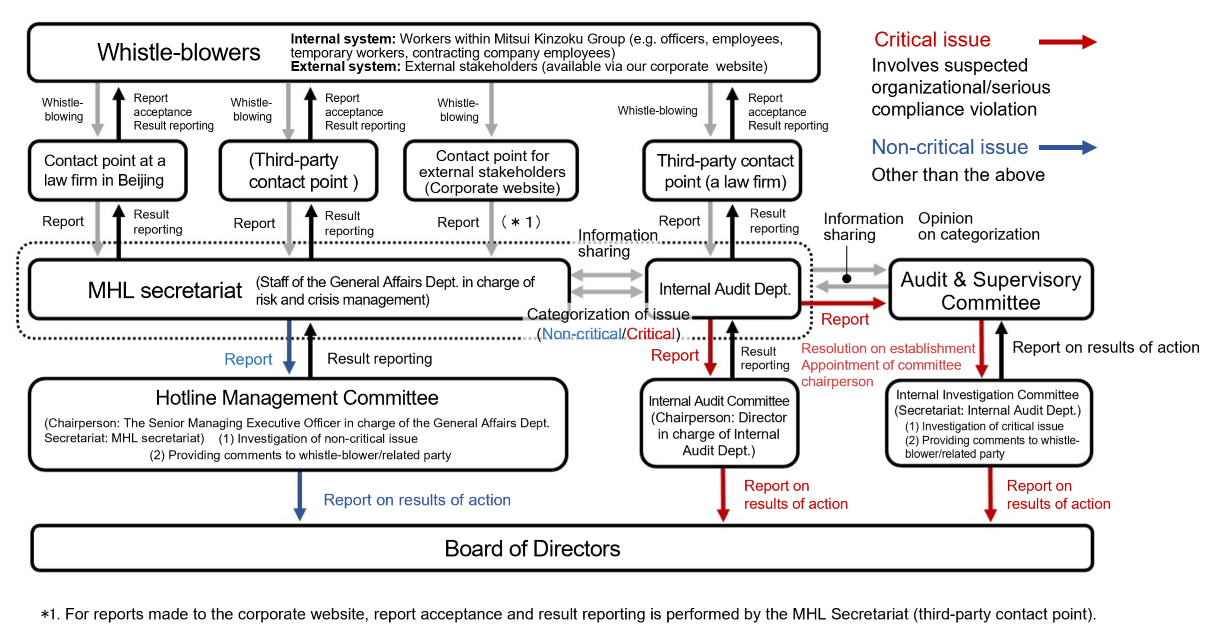
We have established a whistle-blowing system for both internal and external stakeholders. The system covers concerns about violations of laws/regulations and internal rules (including the Code of Conduct) related to unfair competition, bribery/corruption, and occupational health and safety, as well as social risks related to human rights, including but not limited to harassment and environmental risks in our business activities and workplaces.
In order to thoroughly protect whistleblowers, the system ensures anonymity and strictly prohibits any disadvantageous treatment of whistleblowers and witnesses to testify to the facts. The details of the whistle-blowing are shared promptly with the Audit & Supervisory Committee, and reported to the Board of Directors on a regular basis.
We have established the Mitsui Kinzoku Hotline (MHL) for all officers and employees of the Group as internal and third-party (law firm) contact points. We have also set up a Chinese language hotline at a Chinese law firm in Beijing for our sites in China. We disseminate information on the contact points to officers and employees through compliance training and the Compliance Guidebook.
We make the whistle-blowing system a multi-line system by setting up two contact points, one for executive divisions and the other for non-executive divisions, while also building a system that allows immediate information sharing with the Audit & Supervisory Committee when receiving a report.
We outsource an internal multilingual contact point to a third party to increase user convenience. Furthermore, female staff is assigned to the response team to receive whistle-blowing reports, to make it easier for women and native speakers of foreign languages to report incidents.
Contact point for external stakeholders
We have set up “Compliance Consultation Desk” specialized for compliance and “Environmental and Social Risks Consultation Desk” on our corporate website for external stakeholders to report concerns at any time.
Inquiries
Mitsui Kinzoku Group internal and external whistle-blowing system (MHL: Mitsui Kinzoku Hotline)
The number of reports to the Mitsui Kinzoku Hotline (MHL)
Initiatives to Prevent Anti-Competitive Practices and Bribery/Corruption
Article 4 of the Code of Conduct states “Honest Business Activities”. In the Compliance Guidebook, we require all officers and employees to engage in appropriate activities based on free and fair competition. The guidebook specifically states that proper activities include (i) establishment of compliance system and thorough compliance with competition law and (ii) prohibition of bribery and corruption.
Antimonopoly Act
We have created the Antitrust Compliance Policy as a separate volume of the Compliance Guidebook. The Policy was created in four versions (Japanese, English, simplified Chinese, and traditional Chinese) and distributed accordingly to ensure that internal procedures are properly performed.
Prevention of bribery/corruption
To prevent bribery and other forms of corruption, as well as distributing the Compliance Guidebook globally we have facilitated each of our sites to conclude an anti-bribery/corruption agreement with its suppliers. The procurement department in each of domestic and overseas sites has asked its suppliers to sign contracts containing CSR provisions and pledges to respect the Code of Conduct in the efforts of the supply chain management led by the Supply Chain Committee.
Related to these initiatives, the anti-bribery/corruption agreement contains more detailed conditions aimed at preventing bribery/corruption (e.g. prohibition of kickbacks, obligation to report identified violations, cancellation of the contract in case of a violation) and is particularly directed at companies in Asia.
We periodically conduct legal audits on each site both on-site and in writing. The audits check for violations, review the compliance situation and confirm the effectiveness of measures to prevent anti-competitive practices and bribery/corruption described in the Code of Conduct. In Peru, we have also obtained ISO 37001 certification, the international standard for anti-bribery management systems.
Basic Approach towards Excluding Antisocial Forces and Organizations
The Code of Conduct, which is a set of values and actions to be shared by all officers and employees of Mitsui Kinzoku Group, stipulates in Article 5 that everyone must firmly stand against antisocial forces and/or organizations, and hold no relationships whatsoever with these parties.
The General Affairs Department currently heads the Mitsui Kinzoku Group’s efforts to exclude antisocial forces and/or organizations. The Company will continue working to further strengthen the system for excluding antisocial forces and/or organizations.
Initiatives for Economic Security
In response to the recent drive for economic security in society, Mitsui Kinzoku Group is implementing measures to address the issue, chiefly in terms of trade secrets management and export control (security export control).
Trade secrets management
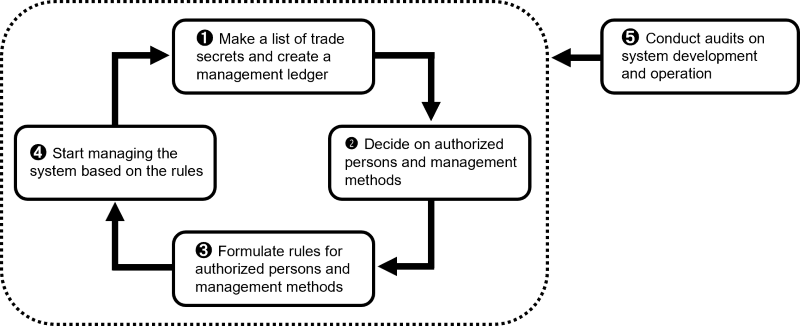
Mitsui Kinzoku Group manages its trade secrets in a systemized way. The primary framework consists of the Regulations for Information Management, Detailed Regulations for Trade Secret Management, and other related regulations (all formulated in 2017), along with the Information Management Committee.
The Committee reports to the Chief Information Management Officer, a position that is held by the Senior General Manager of the Corporate Planning & Control Sector. We have set up the Information Management Committee for the purpose of safeguarding our customer information, technical information, and business know-how.
In addition to basic framework, at each site, the head of the organization is appointed to serve as the site’s Information Administrator, a role that is responsible for fulfilling a range of tasks. Such tasks include: identifying trade secrets; ensuring indication of such secrets; managing the use of and access to ICT tools; keeping records of data access and download history; providing education and training on a regular and ongoing basis; and confirming confidentiality agreements and pledges signed between our officers and employees and business partners.
Furthermore, we perform audits of information management systems, invite representatives of law-enforcement agencies to give lectures, share successful pioneering practices among Group sites, and promote other activities to help improve the information management systems at each site.
Trade secret management system: development process
Export control (security export control)
In 1988, Mitsui Kinzoku created product Regulations for Product Export Control based on the Foreign Exchange and Foreign Trade Act (Foreign Exchange Act), and registered the rules with the Ministry of Economy, Trade and Industry (METI) as its export control compliance program (CP).
We have since formed the Export Screening Committee, chaired by the representative director. Reporting to the Committee, those in charge of each area of business planning, technology/engineering, and administration at each business division are assigned to operate the acceptance/rejection assessment and user check programs.
Every year, the secretariat (Legal Dept.) audits the compliance status, and the results are reported to the METI. The Group’s major subsidiaries in Japan also register their own CP with the METI to facilitate group-wide compliance with the Foreign Exchange Act.
Also, by leveraging the public-private dialogue framework by METI, we are making focused efforts to prevent international leakage of our key technologies that require stronger management from a security perspective.
In addition, we have prepared to utilize databases provided by a third-party agency to conduct research on suspect companies in a bid to strengthen our export control.
Integrated Report Compliance [PDF:11.9MB]